
PARENT GUIDE #1
What We Have in Common
Children are keen observers of what is different between themselves and others. While there is nothing wrong with noticing, creating meaning only from observing differences may lead to biases. It’s important to support your child’s curiosity of others while helping them find connections between themselves and people who look different from them.
We will start with skin color. Many children have heard the words “Black” and “White” used to describe skin color, but often wonder why they don’t see anyone whose skin exactly matches those colors. Alongside exploring skin color, we will explore the concept of “mirrors and windows” to find connections across differences. “Mirrors and windows” was coined by Black scholar Dr. Rudine Sims Bishop to explain the value of reading diverse stories with children. We can learn a lot about ourselves, others, and the world around us when windows and mirrors are present in the books we read and the experiences we have. We will use this concept to help your child understand who they are in the world and how to build healthy curiosity about and empathy for others. Your bookmark includes helpful questions for exploring windows and mirrors with your kids.
Books
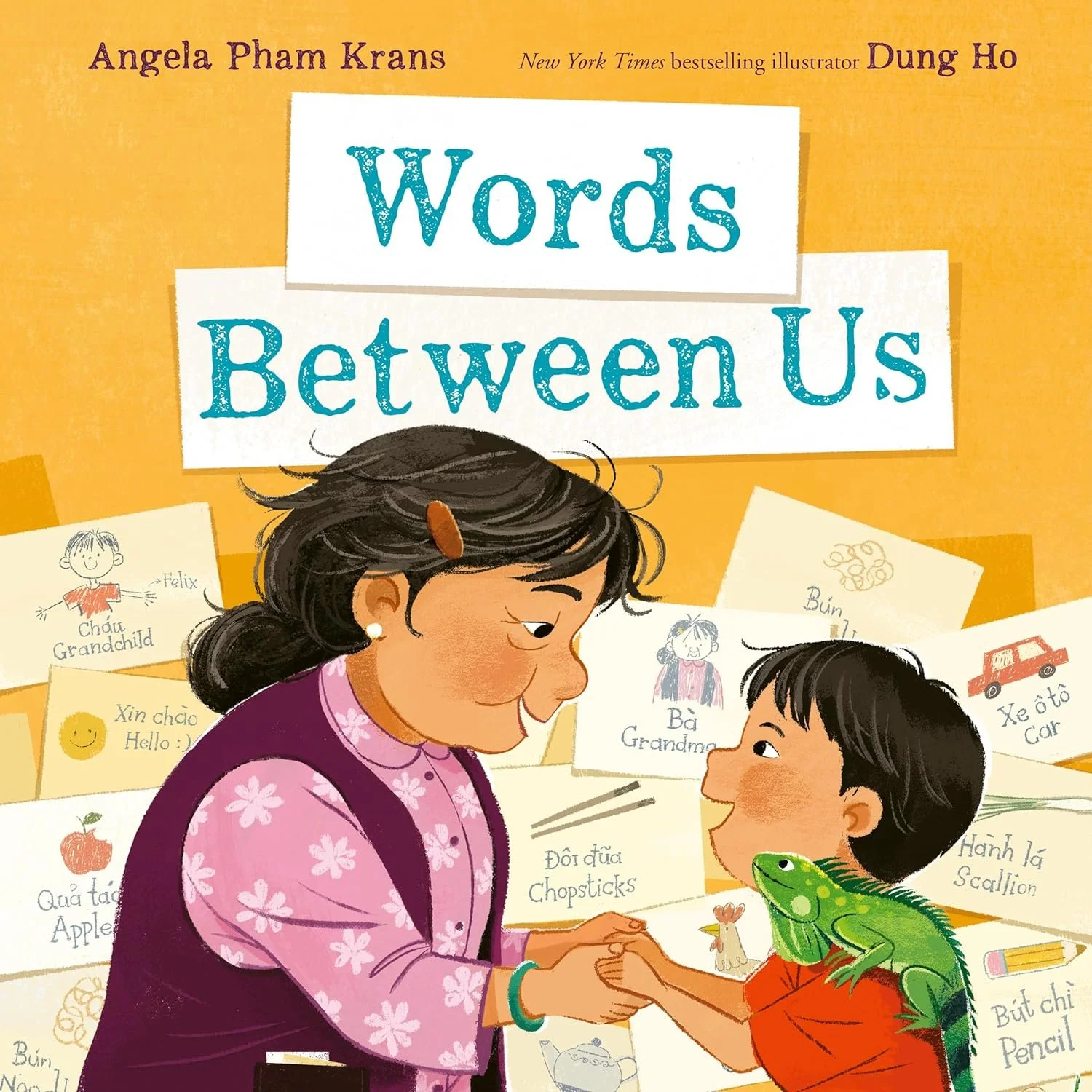
Words Between Us
Written by Angela Pham Krans and Illustrated by Dung Ho
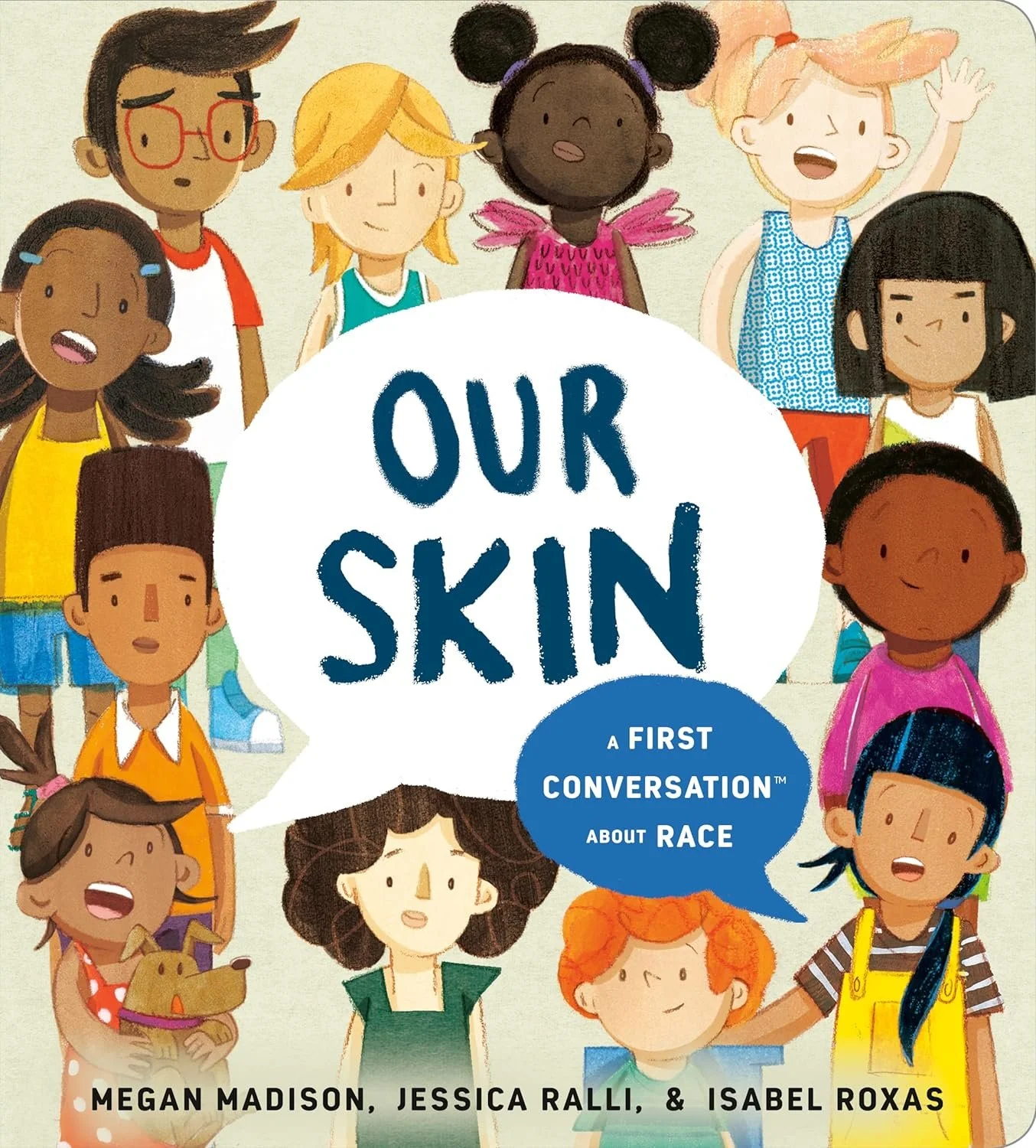
Our Skin
Written by Megan Madison and Jessica Ralli and Illustrated by Isabel Roxas
Identity Statements:
We are a family who talks about what we have in common with people who look different from us.
We are a family that sees and talks about our skin color and others’ skin color and how skin color connects to race.
Bookmark #1
As you read Words Between Us, use the prompts on the bookmark to explore skin color using windows and mirrors. You can also try out the Whole Book Approach.
Our Skin is a unique text in our book bundle. We decided not to include a Story Starters bookmark because of the prompts already embedded in the text. For families who are entirely new to talking about race, we suggest the adults preview this book before reading it with your kids. Our Skin will provide foundational information about where our skin color comes from. Later in the program, we will return to it and focus on how we can define race and racism in words kids can understand.
Activity:
Who Am I?
Who Am I? Is a set of three activities to help you and your kids explore your unique selves: your many identities (including your race), your skin color, and where skin color comes from!
Check Out More Books!
There are so many great books to choose from. Here are some of our favorites for noticing skin color, finding points of connection with people who look different from you, and exploring “windows and mirrors.”
Glossary of Terms
We’ve created this glossary of terms for you and your children to provide definitions that are used throughout our curriculum. If there are terms we use that you would like to see added to this glossary, let us know!
Why this Matters:
We are all wired to prefer people who are “like” us. If our kids can see themselves as similar to those who look different than they do they are able to have increased empathy, positive associations, and general feelings of connectedness. “Mirrors and windows” help us create a balance of connection and differences held within those connections. “Mirrors and windows” help us see that we can be connected to others and different from them at the same time.
Here, you can watch author Grace Lin speak about why the concept of “mirrors and windows” is important to her and how it has inspired her writing.
What the Research says:
Children prefer people who are like them.
Researchers wanted to see how readily children prefer someone who is “like them” over someone who is different from them. They told children about two made-up groups: the Lups and the Nifs. Each child watched a researcher flip a coin to randomly make them either a Lup or a Nif. Then children were asked questions like, “Who stole some money, a Lup or a Nif?” and “Who helped someone at school, a Lup or a Nif?”. Overall, children thought the “other” group was more likely to have done bad things and that their own group was more likely to have done good things. Thus, even when groups are arbitrary and meaningless, children prefer people in their own group over people who are in other groups.
Want to read more?
Baron, A. S., & Dunham, Y. (2015). Representing ‘us’ and ‘them’: Building blocks of intergroup cognition. Journal of Cognition and Development, 16(5), 780-801.[1]
Do’s and Don’ts
DO: Focus on the concept of same but different. “We all have families; our families are all different. We all like to play; what we like to play is different.”
DO: Help your kids hold the idea that individuals are complex and “nobody is just one thing.” Support them in finding both points of similarity and points of difference between another individual and themselves.
DO: Include people who have different and similar racial identities to your family finding while finding “windows and mirrors.”
DO: Notice whether you are finding more “windows” or more “mirrors” and think about why that may be.
DO: Assume your child notices skin color. Talk about skin color differences in a frank and matter-of-fact way, similar to how you might discuss height, eye color, or hair color.
DO: Continue to answer and encourage questions your child has about skin color and racial groups.
DON’T: Share adult fears about race and skin color with your child; kids are often more open and curious than adults.
What you or your kids may ask:
“Aren’t race and skin color the same thing?”
Skin color can be a relatively straightforward concept to talk about with our kids. Our skin color is determined by our ancestry and the amount of melanin in our bodies.
Race, on the other hand, is a more abstract concept - tricker to define and more confusing for kids. The concept of race was invented more than 400 years ago by White Europeans to justify and maintain their political and economic dominance over others. Our previous program email, Building Background Knowledge, includes resources to help define race. Don’t expect your family to master the nuances of race in a couple of weeks. Understanding that race is a made-up concept with serious real-life implications requires multiple discussions and reflections. It’s important to remember that race is often confused with skin color, ethnicity, or nationality–but it is not synonymous with any of these things. It’s also important to know that although race is a socially constructed concept designed to oppress, it can also be an important part of marginalized people’s identities.
For now, you can begin with a simple definition of race as “groups that White people made up a long time ago to divide people based on their skin color and appearance. There are many names for these groups, including White, Black, Asian, Latino/a/e, Indigenous, and more.”
You can follow this definition with open-ended questions, such as:
What race are you/we?
Do you think you can tell someone’s race by looking at them?
What else do you know about race?