
PARENT GUIDE #3
Decentering Whiteness
As we shift from individuating and seeking multiple stories to speaking openly about racial identities, we’ll keep three goals in mind:
1. Speak positively about BIPOC
By the age of four, kids begin to show evidence of societal messages affecting how they feel about themselves and their group identity. Children who are White show the beginnings of internalized superiority, and BIPOC (Black, Indigenous, people o color)* kids show the beginnings of internalized oppression (Derman-Sparks, 2012). If you have a child of color, you have likely already been talking positively about your child’s racial identity. Keep it up! Talking positively about other BIPOC is also important. Research shows that parents of color are three times more likely to discuss race with their children than White parents (Brown, Tanner-Smith, Lesane-Brown, & Ezell, 2007). Even so, these conversations by BIPOCparents tend to focus on their own racial identity. In order to preempt external bias, you must also talk positively about other marginalized groups.
2. Decenter Whiteness
As we practice noticing and naming skin color and race, we must be careful to not make Whiteness the standard by which we compare everything else. When we notice and name light skin and White people as one of many skin colors and races we start to counter the mainstream messaging that Whiteness is the norm.
3. Get specific
When children hear even positive generalizations about groups of people, they begin assuming that they can tell what a person is like based on a group with which they identify. Rather than ascribing a characteristic to an entire group, specify who you’re talking about.
*Read this article to understand why we have chosen to use the acronym BIPOC in our curriculum and this article to learn more about the complexity and debate around the term.
Books
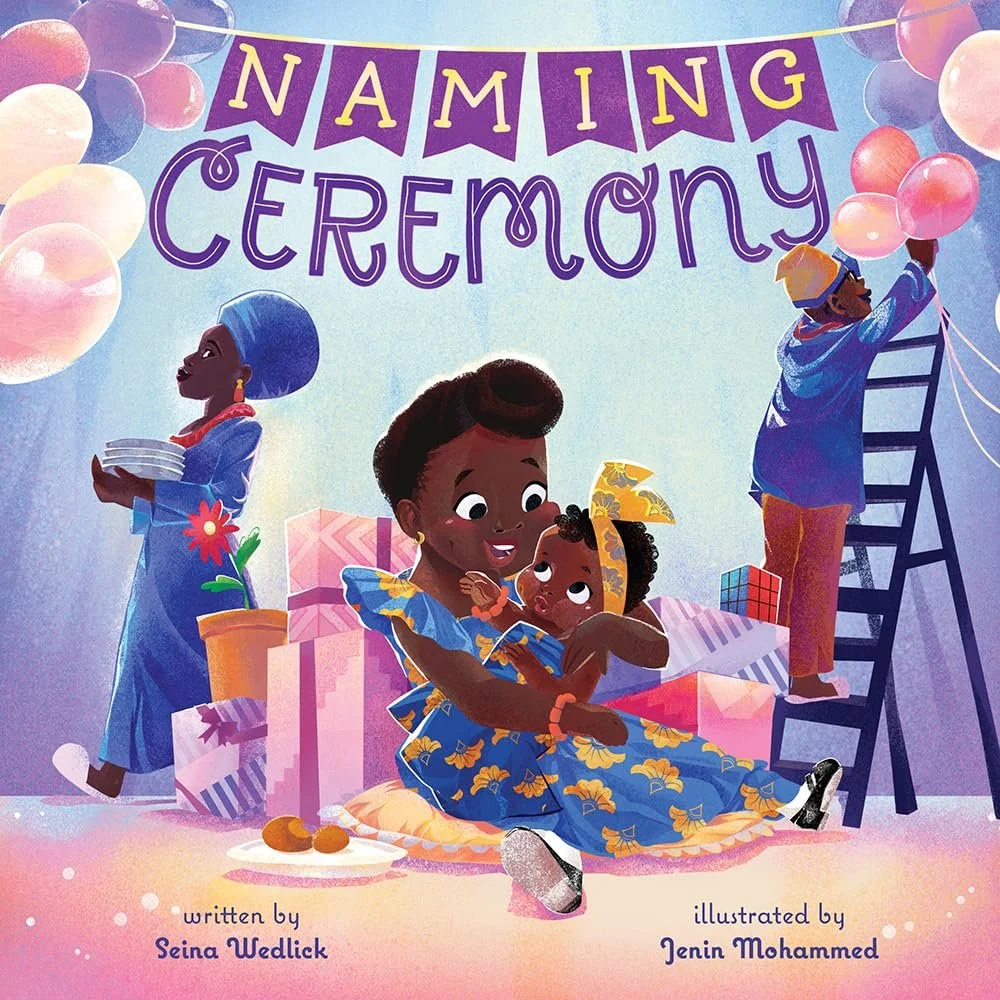
Pre-K Book:
Naming Ceremony
Written by Seina Wedlick and Illustrated by Jenin Mohammed
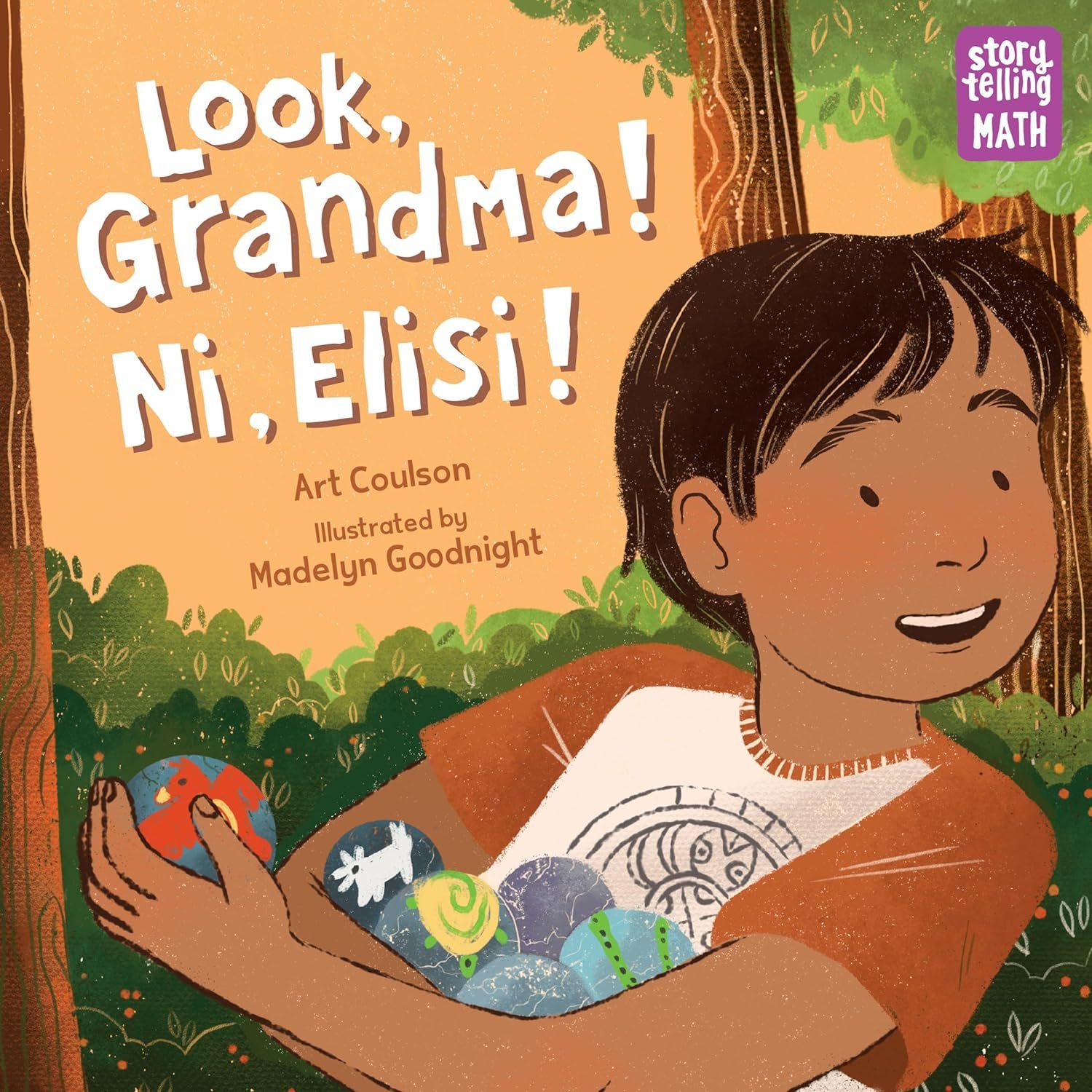
Elementary Book:
Look, Grandma! Ni, Elisi!
Written by Art Coulson and Illustrated by Madelyn Goodnight
Identity Statements:
We are a family who speaks specifically and positively about Black, Indigenous, people of color, whether that means ourselves or others.
We are a family who names Whiteness as one of many differences, not as the norm to which all other differences are compared.
Bookmarks
Activity:
Practice Being Specific!
The book Children Just Like Me is a great resource for this topic. This 2-minute video will give you and your kids a preview. (You may need to read the subtitles for them.) Based on the book and/or the video, practice finding specific points of difference and similiarty:
Explore similarities between you and a child you just “met” (in the book or video)
Explore differences between you and a child you just “met”
Share specific positive statements about a child you just “met” (avoid generalizations)
Glossary of Terms
We’ve created this glossary of terms for you and your children to provide definitions that are used throughout our curriculum. If there are terms we use that you would like to see added to this glossary, let us know!
Why this Matters:
Your child needs to hear your thoughts and see you acting on your values. If they don’t know what the grownups in their lives think, they will be left to make meaning of the world around them with incomplete information. What they decide or interpret on their own is not always aligned with the values you wish to teach them. One research study found that almost 40% of White children did not know if their parents “liked” Black people, despite parents reporting cross-racial friendships (Vittrup & Holden, 2011). We can eliminate the guesswork for our kids by clearly communicating in a variety of ways how racial diversity matters to us. We can: Talk about racial diversity, bring diverse books into our home, directly say to our kids that we want them to have friends of all races, and have cross-racial friendships of our own.
What the Research says:
Your opinions matter a lot to your kids. Research shows that kids care what their parents think about interracial friendships. A child’s perception of who their parents want them to play with has a huge impact on who the child reports liking and wanting to play with themselves. Our friends at the Conceptual Development and Social Cognition Lab at NYU report, “From both our longitudinal and cross-sectional data, especially for younger children (4-5), perceptions of parent norms are the strongest predictor of racial bias” (Rhodes, 2019).
Want to read more?
Do’s and Don’ts
DO: Speak positively about people of other racial groups, letting your child know how you feel.
DO: Ask your child how they feel about different characters.
DO: Name and notice Whiteness along with naming and noticing BIPOC identities.
DON’T: Assume you know how your child feels about other racial groups (even if you and/or your child are people of color).
DON’T: Describe BIPOC identities as ‘different’ or ‘unique’ while using neutral language for White people or not describing them at all (e.g., notice if you call books with BIPOC characters ‘diverse books’ vs books with White characters just ‘books’).
DON’T: Make generalizations - even positive ones - about groups of people. Instead, make specific observations about individuals.
What you or your kids may ask:
“How do I respond when my child stereotypes people?”
When your child definitively states: “Brown people don’t speak English," your gut response might be “Oh no, what have I created?!”
First off, if your child is saying this out loud rather than just thinking this in their head, that means you’ve moved the needle in the right direction when it comes to talking about race. Remember, children are making assumptions all the time. When they feel inclined to share them with you, it’s an opportunity to offer them an alternative way of thinking.
Next, resist the urge to immediately counter their generalization like, “Brown people do speak English.” This will reinforce their brain’s ability to make meaning from grouping people and make them believe that they can in fact tell something definitive about an individual based on their identities.
Instead, get curious. In a calm and inquisitive tone, ask questions like:
Who are you thinking of?
What makes you think they don’t speak English?
You’re right, ____ doesn’t speak English. But what about [offer a Brown person’s name that they’re familiar with]? They speak English.
Or: _____ does speak English. We speak English with a (Standard American) dialect and they speak English with a _____ English. There are many different ways to speak English.
[A Brown person’s name your child knows] speaks different languages like…They also have brown skin.
“As parents and caregivers, we can use our language carefully to help children learn to view themselves and others as individuals, free to choose their own paths. With our language, we can help children develop habits of mind that challenge, rather than endorse, stereotyped views of the people around us.” - Marjorie Rhodes